
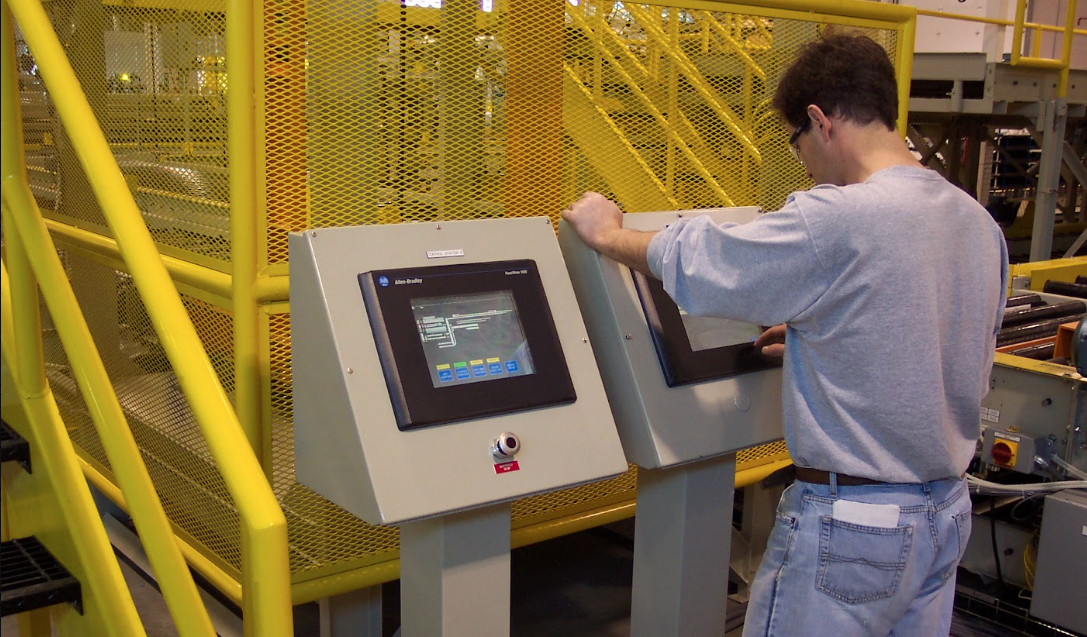
Of all the things that can blow up a brownfield conveyor retrofit, controls surprises are the most expensive. Mechanical wear is visible if you know where to look. Controls problems hide. A PLC platform that’s been discontinued, a panel that’s never been properly documented, a safety system that hasn’t met current standards in a decade — none of that shows up until you’re already committed to a scope.
Before you finalize your assessment on any brownfield controls project, these are the things worth checking.
Controls and Electrical Assessment
Controls are where brownfield projects hide the most expensive surprises. Old PLC platforms, undocumented wiring, and safety systems that don’t meet current standards can turn a straightforward mechanical retrofit into a full controls replacement.
PLC and Controls Platform
- PLC age and supportability: Identify the PLC platform and check parts availability. A PLC that’s been discontinued is a liability. If the processor fails during commissioning or early operation, you may not be able to source a replacement. Know this before you scope.
- Program backup: Confirm that a current backup of the PLC program exists and is accessible. If it doesn’t, getting the program out of the existing PLC before any work begins is a non-negotiable first step.
- I/O capacity: Review the existing I/O configuration against what the retrofit will require. If the new system needs additional I/O, determine whether existing cards can accommodate it or whether new hardware is needed.
- Network and communication protocols: Identify what communication protocols the existing system uses and whether they’re compatible with the new equipment being integrated. Mismatched protocols are a common source of integration delays.
Wiring and Electrical Infrastructure
- Panel condition: Inspect control panels for corrosion, heat damage, or evidence of moisture intrusion. Check that wiring is labeled and that the labels match any available documentation. Unlabeled wiring in a panel is hours of reverse-engineering work.
- Conduit and cable runs: Walk the cable runs and inspect conduit for damage, improper fill, or sections that have been patched or improvised over the years. Budget for conduit replacement in areas where the existing infrastructure is compromised.
- Grounding: Verify that the system is properly grounded. Grounding issues that haven’t caused problems on older equipment can surface as noise and interference problems when new controls are installed.
- Power supply capacity: Confirm that the existing power supply infrastructure can support the retrofit. Adding drives, sensors, and new control hardware to an existing panel can push the power supply beyond its capacity.
Safety Systems
- E-stop coverage: Map the existing e-stop coverage against current safety standards. Systems installed more than ten years ago frequently have e-stop configurations that don’t meet current requirements. If the retrofit requires a safety system update, scope it explicitly.
- Guarding: Identify guarding deficiencies that will need to be corrected as part of the retrofit. Don’t inherit a safety liability because the existing system was running without adequate guarding.
- Safety relay and controller condition: Inspect safety relays and any safety PLCs for age and condition. Safety hardware has a rated operational life. Hardware that’s beyond that life needs replacement regardless of whether it appears functional.
If you’re scoping a brownfield retrofit and the controls picture isn’t adding up, that’s a good time to bring in a second opinion. Power Pack works with integrators at the assessment stage — not just on the mechanical side, but on understanding how the controls condition affects the full scope of the project. Talk to a Power Pack engineer.
